After years of decorating and planning intimate weddings, one thing is always clear: small weddings may look simpler on the surface, but they still require intentional planning. A reduced guest list does not automatically mean fewer decisions. In many cases, couples hosting small weddings want every detail to feel more personal, more meaningful, and more refined.
A well-structured 10+ wedding planning checklist for small weddings helps prevent overlooked details that can quietly create stress later. Small weddings leave less room for error because every element stands out. From table styling to ceremony flow, even the smallest choice can shape the entire experience.
Planning without a checklist often leads to last-minute scrambling. Décor arrives without a clear layout, timelines feel rushed, or couples realize too late that certain essentials were never booked. A checklist keeps the planning grounded and intentional from the very beginning.
Most importantly, a checklist gives couples permission to enjoy the process. When each step is clearly mapped out, planning becomes calmer, more creative, and far less overwhelming.
What Truly Defines a Small Wedding
A small wedding is not just about guest count, although that is usually the first defining factor. From experience, most small weddings fall between 10 and 50 guests, but the real distinction lies in the atmosphere and priorities.
Small weddings are often hosted in intimate venues such as private gardens, boutique hotels, family homes, micro wedding venues, or scenic outdoor spaces. These settings naturally encourage closer interaction and thoughtful design rather than large-scale production.
Another defining element is intention. Couples planning small weddings typically care deeply about quality over quantity. They may invest more into décor, food presentation, florals, or personalized details because each guest will notice and experience everything up close.
Understanding what makes a wedding “small” helps shape every decision on your checklist. It influences budgeting, vendor selection, décor scale, and even the structure of the wedding day itself.
Why a Wedding Planning Checklist Is Essential for Small Weddings
Small weddings benefit even more from checklists because there are fewer distractions to hide planning gaps. When something is missing, it shows. When something is beautifully done, it feels incredibly special.
A 10+ wedding planning checklist for small weddings helps couples stay organized while maintaining flexibility. It provides structure without forcing unnecessary traditions or large-wedding expectations that don’t fit intimate celebrations.
A checklist also helps couples:
-
Prioritize what truly matters
-
Avoid spending on unnecessary items
-
Balance aesthetics with practicality
-
Plan décor layouts realistically for smaller spaces
From a decorator’s perspective, the most successful small weddings are always the ones where planning decisions were made early and intentionally. A checklist ensures nothing important is left to chance.
How to Use This 10+ Wedding Planning Checklist Effectively
A checklist should never feel like a rigid rulebook. It should function as a guide that adapts to your wedding style, location, and priorities. The key is knowing how to use it wisely.
Start by reviewing the entire checklist early in the planning process. This allows you to see what decisions are coming and prevents surprises later. Many couples make the mistake of focusing only on the next task, which can lead to rushed decisions down the line.
Next, adjust the checklist to suit your timeline. Some small weddings are planned in a year, others in six months or less. The checklist remains useful either way, as long as tasks are reordered logically.
Finally, revisit the checklist regularly. Planning evolves, and so do priorities. Treat the checklist as a living document that supports clarity rather than pressure.
Small Wedding Planning Checklist: 12 to 6 Months Before
This phase sets the foundation for the entire wedding. Decisions made here influence budget, style, and overall flow, so taking time with this stage pays off later.
The first priority is defining the vision. Before booking anything, couples should clarify the type of small wedding they want. Is it romantic and elegant, relaxed and minimalist, or warm and family-focused? As a decorator, I always advise couples to choose one clear direction to avoid mixing styles.
Guest list creation also happens during this period. With small weddings, every guest matters, so this list should be intentional. Knowing the guest count early makes venue selection much easier and prevents booking spaces that feel either cramped or empty.
Other key tasks during this stage include:
-
Setting a realistic budget based on priorities
-
Choosing a wedding date or date range
-
Booking the venue
-
Securing key vendors such as photographer and caterer
Because small weddings often use non-traditional venues, it’s especially important to confirm what is included and what needs to be brought in separately.
Small Wedding Planning Checklist: 6 to 3 Months Before
This stage is where planning becomes more detailed and design-focused. With the foundation in place, attention shifts to how the wedding will look and feel.
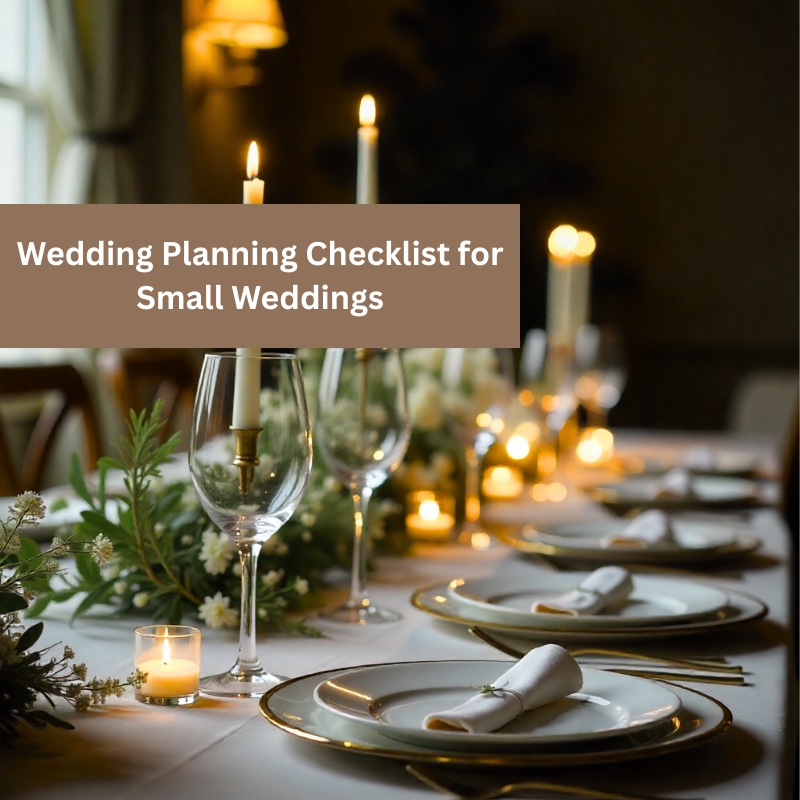
Décor planning usually begins here. For small weddings, décor should enhance the space without overwhelming it. Table sizes, guest seating, floral scale, and lighting placement all matter more in intimate settings. Every element is seen up close, so quality and balance are essential.
Attire decisions also take shape during this phase. Whether formal or relaxed, outfits should align with the wedding style and venue. Small weddings allow for more personal fashion choices, but comfort and cohesion should still be considered.
During this period, couples typically:
-
Finalize décor concepts and color palette
-
Book additional vendors such as florists or musicians
-
Begin planning ceremony structure
-
Arrange accommodation for themselves or close guests if needed
Planning at this stage often feels exciting, but it’s also where details can become overwhelming. A checklist keeps everything moving steadily without losing focus.
Small Wedding Planning Checklist: 3 Months to 1 Month Before
This phase is where small weddings either come together beautifully or begin to feel rushed if details were overlooked earlier. With fewer guests, timelines tend to be tighter, and each decision now directly impacts the final experience.
At this stage, layout planning becomes essential. Seating arrangements, ceremony spacing, and table placement should be finalized with real measurements in mind. Small venues require intentional flow so guests never feel crowded or confused about where to go next. From a décor standpoint, this is when scaled-down design truly shines.
Menu tastings and final catering decisions usually happen during this window. Small weddings allow couples to be more creative with food, whether that means curated menus, family-style dining, or plated meals with elevated presentation. Every guest will remember the meal, so quality matters more than quantity.
Other key checklist items during this phase include:
-
Finalizing ceremony structure and timing
-
Ordering stationery or signage
-
Confirming rentals such as chairs, tables, linens, and lighting
-
Scheduling hair and makeup trials
Careful attention during this stage prevents last-minute stress and allows couples to enjoy the final weeks of planning.
Small Wedding Planning Checklist: Final Month and Wedding Week
The final month is about refining, confirming, and simplifying. At this point, most major decisions should already be made. The focus now shifts to execution rather than creation.
Vendor confirmations are critical during this time. Every supplier should be contacted to confirm arrival times, setup needs, and responsibilities. Small weddings often rely on tighter schedules, so clarity is essential to avoid delays.
Décor styling plans should also be finalized. This includes table layouts, floral placement, signage positioning, and any personal touches such as photos or keepsakes. Small weddings benefit from fewer but more meaningful décor elements, so each item should have a purpose.
During the final week, the checklist should include:
-
Packing décor and personal items
-
Preparing vendor payments or tips
-
Printing final timelines
-
Assigning a point person for the wedding day
A well-organized final checklist allows couples to enter their wedding week feeling calm and confident.
Small Wedding Budget Checklist: What Truly Matters
Budgeting for small weddings is often misunderstood. A smaller guest list does not always mean a smaller budget, but it does allow for smarter spending.
From experience, the most successful small weddings prioritize areas that directly impact guest experience. Food, atmosphere, and comfort should always come before excess décor or trends that don’t align with the couple’s style.
Here is a simple breakdown of common budget priorities for small weddings:
| Category | Why It Matters for Small Weddings |
|---|---|
| Venue | Sets the tone and flow of the entire event |
| Catering | Every guest experiences this directly |
| Décor | Small spaces require thoughtful design |
| Photography | Intimate moments deserve proper capture |
| Lighting | Enhances mood and elevates simple spaces |
Using a checklist to track spending ensures that money is allocated intentionally rather than emotionally.
Small Wedding Venue and Space Planning Checklist
Venue choice plays a bigger role in small weddings than in large ones. The wrong space can feel empty or overly tight, while the right one feels warm and welcoming.
Space planning should consider how guests move from ceremony to reception. Even if everything happens in one location, transitions should feel natural. Furniture layout, signage placement, and décor zones all help guide guests without confusion.
Small weddings also benefit from using spaces creatively. Corners can become lounge areas, hallways can feature photos or florals, and outdoor areas can be styled for cocktail moments.
Key space planning considerations include:
-
Guest seating comfort
-
Clear walkways
-
Visual balance within the room
-
Weather backup plans for outdoor venues
Thoughtful space planning makes even the smallest venue feel intentional and elegant.
Small Wedding Decor Checklist: Less, But Better
Decorating small weddings requires restraint and confidence. Overdecorating is one of the most common mistakes couples make when working with intimate spaces.
Every décor element should earn its place. Instead of filling the room, focus on highlighting key areas such as the ceremony backdrop, guest tables, and entrance points. Quality materials and cohesive colors elevate the entire setting.
Lighting deserves special attention. Candles, fairy lights, and soft uplighting transform simple spaces into romantic environments without overwhelming them.
A strong décor checklist typically includes:
-
Ceremony focal point
-
Table styling essentials
-
Lighting elements
-
Personal details with meaning
When décor is intentional, small weddings feel refined rather than minimal.
Small Wedding Guest Experience Checklist
Guest experience is where small weddings truly stand out. With fewer people, couples can be more present and thoughtful, creating moments that feel personal and memorable.
Comfort should always come first. Seating, temperature, and timing all affect how guests experience the day. Small weddings allow for relaxed schedules, which guests often appreciate.
Personal touches make a significant impact. Handwritten notes, meaningful favors, or curated playlists create emotional connections that guests remember long after the wedding.
Checklist items focused on guest experience include:
-
Clear ceremony and reception flow
-
Thoughtful seating arrangements
-
Meaningful interactions
-
Smooth transitions between moments
A guest-focused checklist ensures the wedding feels warm, welcoming, and well-paced.
Common Small Wedding Planning Mistakes to Avoid
Even with the best intentions, small weddings can face challenges if planning is rushed or unfocused. One common mistake is underestimating logistics simply because the guest list is short.
Another issue is trying to replicate a large wedding in a small space. Small weddings thrive when they embrace intimacy rather than scale.
Lastly, skipping professional guidance often leads to avoidable stress. Even minimal décor benefits from expert insight, whether through a decorator, stylist, or planner.
Avoiding these mistakes allows small weddings to shine in their simplicity.
FAQs About Wedding Planning Checklists for Small Weddings
Many couples wonder if a checklist is truly necessary for intimate celebrations. From experience, the answer is always yes. Organization creates freedom, not restriction.
Another common question involves timelines. Small weddings can be planned faster, but skipping steps often leads to compromises. A checklist ensures every decision is still thoughtful, even when time is limited.
Finally, couples often ask if traditions must be followed. Small weddings allow for flexibility. A checklist supports customization rather than conformity.
Final Thoughts on Planning a Small Wedding With Confidence
A 10+ wedding planning checklist for small weddings is not about controlling every detail. It’s about creating clarity, reducing stress, and making space for meaningful moments.
Small weddings offer something truly special: connection, intention, and presence. With the right checklist and mindset, planning becomes a rewarding journey rather than a stressful task.
When every decision is made with care, small weddings don’t feel small at all—they feel unforgettable.