Over the years, I’ve watched wedding décor evolve in fascinating ways. One of the most refreshing shifts I’ve seen is couples intentionally choosing to decorate their wedding without flowers. This decision is no longer driven solely by budget concerns. Instead, it often reflects personal style, sustainability values, venue limitations, or a desire for something truly unique.
Flowers are beautiful, but they are not the only way to create a warm, romantic, and unforgettable wedding atmosphere. Some venues restrict floral installations, others already have strong architectural features, and many couples simply want décor that feels more meaningful and less traditional. When done thoughtfully, a flower-free wedding can feel just as luxurious, emotional, and visually stunning as one filled with blooms.
From my professional experience, the most successful non-floral weddings are those that focus on mood, texture, lighting, and intentional design choices. Décor becomes less about filling space and more about enhancing it. When flowers are removed from the equation, creativity takes center stage—and that’s where the magic happens.
Is It Okay to Have a Wedding Without Flowers?
This is one of the most common questions couples ask when they start exploring alternative décor ideas. The short answer is yes, absolutely. A wedding without flowers is not only acceptable—it can be incredibly elegant and memorable.
Weddings are personal celebrations, not rulebooks. There is no requirement that flowers must appear on tables, aisles, or arches. In fact, some of the most visually striking weddings I’ve designed relied entirely on lighting, fabrics, candles, and meaningful objects rather than floral arrangements.
What matters most is cohesion. A flower-free wedding works best when the décor feels intentional rather than like something is missing. When every design choice supports the overall theme and atmosphere, guests rarely notice the absence of flowers. Instead, they remember how the space made them feel.
What to Consider Before Decorating a Wedding Without Flowers
Before committing to a flower-free wedding design, it’s important to think through a few foundational elements. Skipping flowers doesn’t mean skipping planning—in many cases, it requires even more thoughtful decisions.
Start with the venue. Some spaces already offer strong visual impact through architecture, scenery, or built-in décor. Historic buildings, modern industrial venues, beach locations, and outdoor landscapes often need very little enhancement. Understanding what the venue already provides allows décor to complement rather than compete.
Next, consider the mood and theme of the wedding. Are you aiming for romantic, modern, dramatic, cozy, or minimal? Flowers often soften a space, so when they’re removed, texture and lighting need to work harder. This might mean layering fabrics, using warm lighting, or incorporating materials like wood, metal, or glass.
Budget and logistics also play a role. While flowers can be expensive, some non-floral décor elements—such as lighting installations or custom backdrops—require careful planning and setup. The key is balance. I always recommend investing in fewer, impactful design elements rather than filling the space with too many small details.
How to Decorate a Wedding Without Flowers
Decorating a wedding without flowers is all about shifting focus. Instead of relying on blooms to fill visual space, the goal is to create atmosphere through intentional design choices. Below are some of the most effective and elegant ways I’ve used to style weddings without a single flower in sight.
#1. Use Candles to Create a Romantic Wedding Atmosphere
Candles are one of the most powerful tools in flower-free wedding décor. When used correctly, they instantly add warmth, romance, and intimacy to any space. I often tell couples that candlelight can do what flowers cannot—it transforms the way a room feels, not just how it looks.
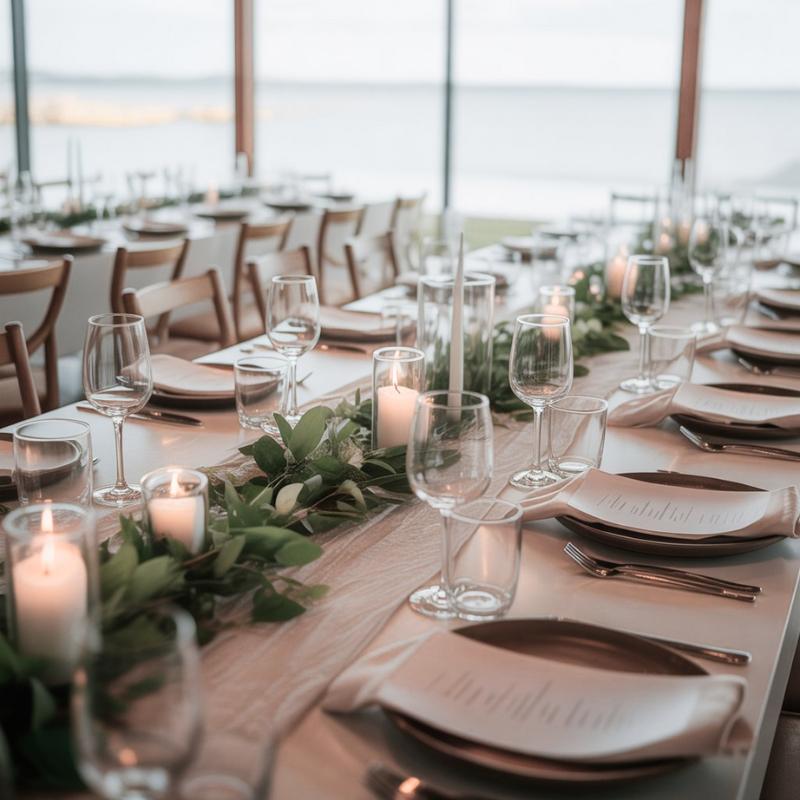
Tall taper candles create drama and height on reception tables, while clusters of votives add depth and softness. Floating candles in clear glass cylinders are especially effective for modern or minimalist weddings. When placed at varying heights, they prevent tables from feeling flat or empty.
Candles also work beautifully beyond table décor. Aisles lined with lanterns, ceremony backdrops lit with pillar candles, or staircases accented with soft candlelight all contribute to a cohesive, elegant look. Safety and venue rules should always be considered, but when permitted, candles are a timeless and impactful alternative to flowers.
#2. Incorporate Greenery and Foliage Alternatives
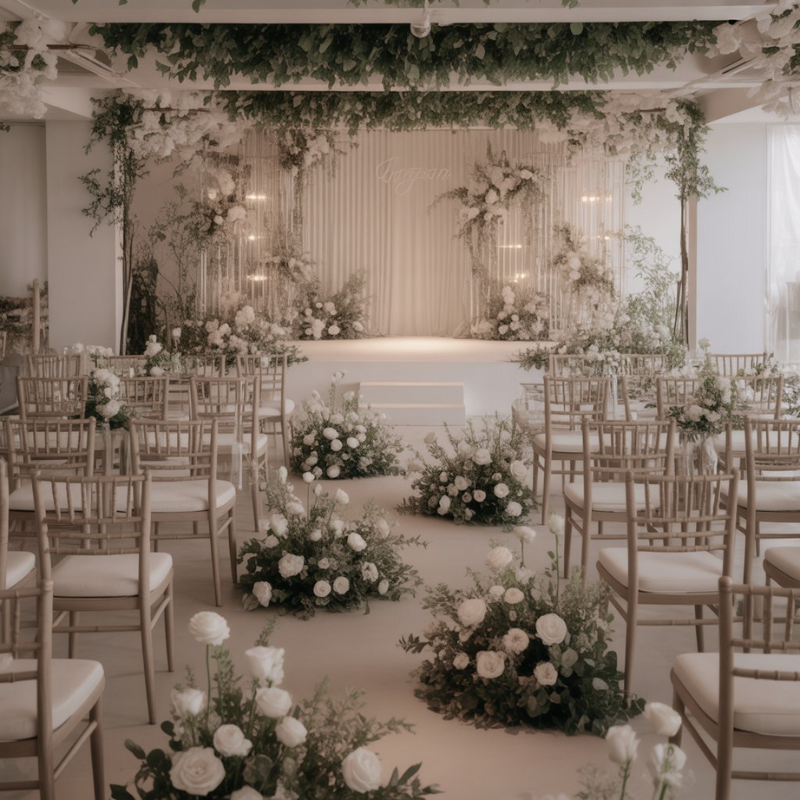
Although greenery is technically botanical, many couples who want to avoid traditional florals still feel comfortable using foliage-based elements. This approach works well for those who want an organic feel without relying on bouquets or floral centerpieces.
Potted plants, olive branches, eucalyptus stems, or even dried leaves can add life and texture without overwhelming the design. Unlike fresh flowers, these elements often feel more grounded and relaxed, making them ideal for modern, rustic, or destination weddings.
Another advantage of greenery alternatives is versatility. Potted plants can double as ceremony décor and reception accents, and they can even be gifted to guests afterward. This not only reduces waste but also adds a thoughtful, sustainable touch to the celebration.
#3. Style the Space With Fabric, Draping, and Textiles
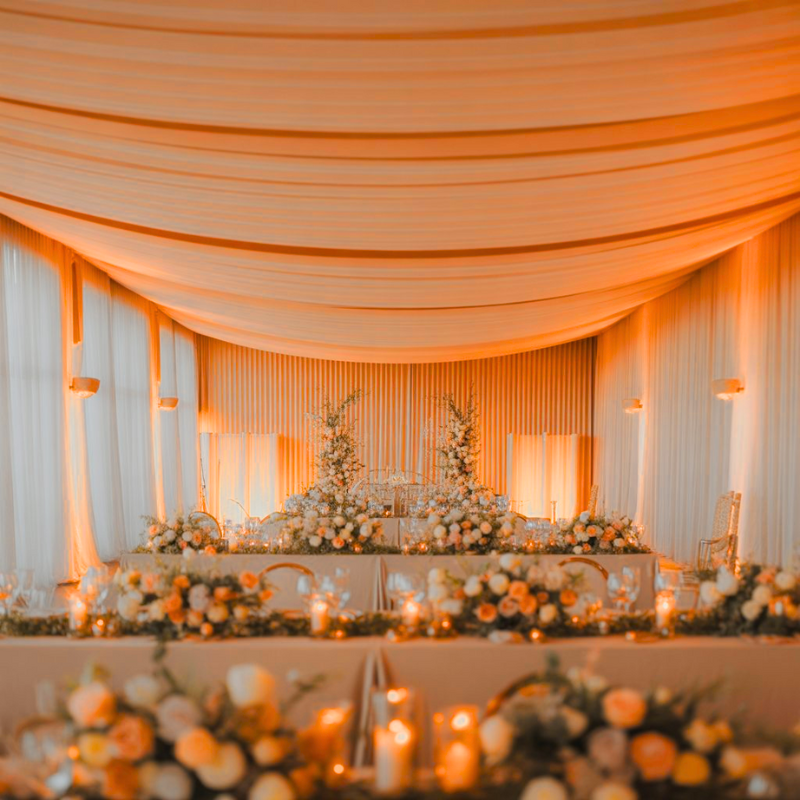
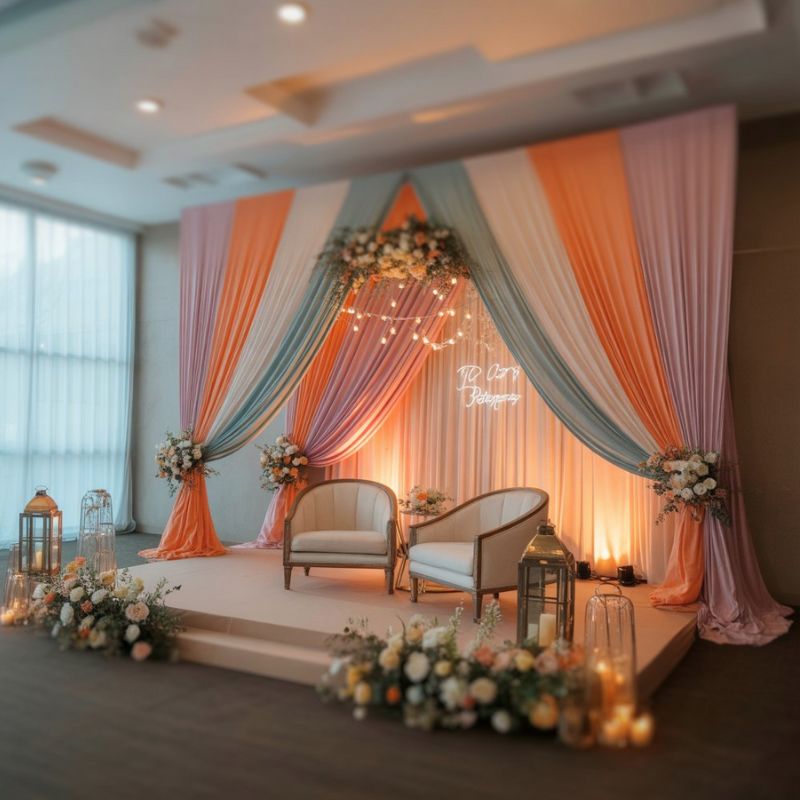
When flowers are removed from the décor plan, fabric becomes one of the most effective tools for transforming a space. I’ve used draping countless times to soften large venues, add movement, and create an atmosphere that feels intentional and polished rather than bare.
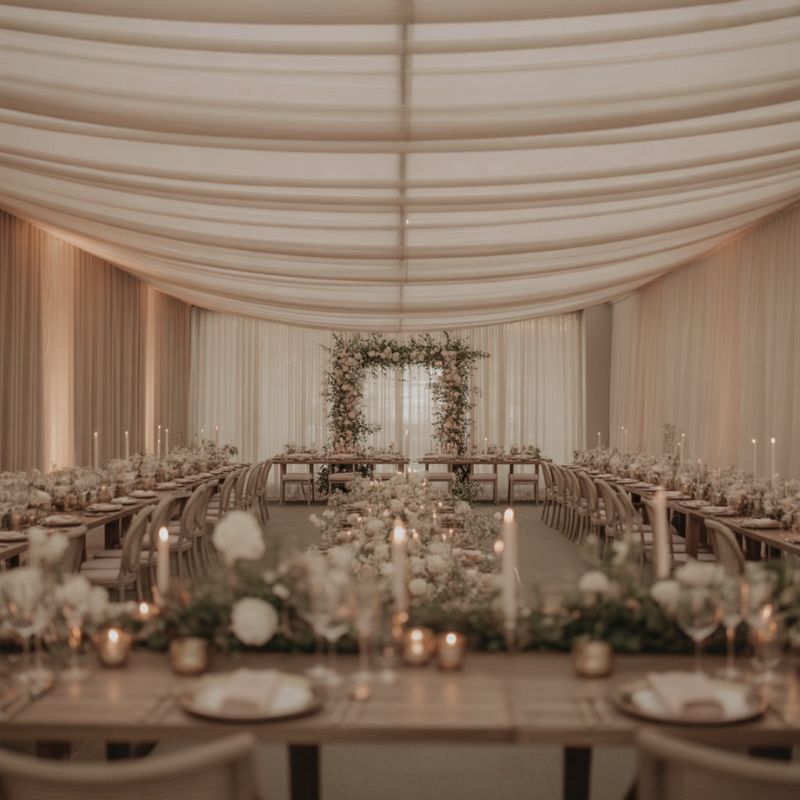
Ceiling draping instantly elevates a room, especially in banquet halls or industrial spaces with high ceilings. Soft fabrics like chiffon or voile create a romantic effect, while heavier textiles such as velvet or linen feel rich and dramatic. Even subtle fabric installations can completely change how a venue feels without overwhelming it.
Textiles don’t stop at ceilings. Table runners, layered linens, chair draping, and ceremony backdrops all contribute to a cohesive design. Mixing textures—such as linen with gauze or silk with lace—adds depth and keeps the décor visually interesting. When used strategically, fabric replaces flowers by adding softness, dimension, and flow.
#4. Decorate With Statement Lighting Instead of Flowers
Lighting is often underestimated, yet it’s one of the most powerful elements in wedding décor. In flower-free weddings, lighting doesn’t just support the design—it becomes the design.
Statement lighting pieces such as chandeliers, pendant lights, fairy lights, or festoon lighting create instant visual impact. I’ve seen venues go from ordinary to breathtaking simply by adjusting the lighting plan. Warm lighting, in particular, adds intimacy and elegance that flowers typically provide.
Uplighting is another effective technique. Soft washes of light against walls, columns, or trees help define the space and enhance architectural features. When colors are chosen carefully, lighting can reinforce the wedding theme without feeling distracting. The goal is always balance—lighting should guide the mood, not overpower it.
#5. Use Personal and Meaningful Decorative Elements
One of the advantages of decorating a wedding without flowers is the opportunity to make the space deeply personal. Without standard floral arrangements, décor can tell a story about the couple instead.
I often encourage couples to incorporate items that hold meaning, such as framed photos, handwritten quotes, heirloom pieces, or travel-inspired accents. These details naturally draw attention and spark conversation among guests. When placed thoughtfully, they feel intentional rather than cluttered.
Personal décor works especially well in areas like welcome tables, lounge spaces, and cocktail-hour setups. These elements add warmth and authenticity, reminding guests that the wedding is not just a visual experience but an emotional one as well.
#6. Add Texture With Non-Floral Centerpieces
One of the biggest concerns couples have when skipping flowers is how to style reception tables. The truth is, non-floral centerpieces can be just as striking when designed with texture and scale in mind.
Candles remain a popular choice, but they work best when combined with other elements. Think glass vases, metallic accents, books, ceramic pieces, or wooden trays. Mixing materials prevents tables from feeling flat and adds visual interest from every angle.
Height variation is also important. Alternating between tall and low centerpieces creates rhythm across the room. Even simple elements, when grouped thoughtfully, can feel luxurious. The key is repetition and consistency—tables should feel connected, not randomly decorated.
#7. Embrace Architectural and Venue Features
Some venues already offer incredible built-in beauty, yet it often gets hidden behind heavy décor. When decorating a wedding without flowers, I always look for ways to highlight what’s already there.
Exposed brick walls, wooden beams, stone columns, staircases, and panoramic windows all deserve attention. Rather than covering these features, enhance them with lighting, minimal accents, or strategic furniture placement.
Outdoor venues benefit from the same approach. Beaches, gardens, forests, and rooftops provide natural beauty that doesn’t need floral reinforcement. Sometimes, the most elegant choice is restraint—allowing the surroundings to speak for themselves.
Best Areas to Decorate Without Flowers
Not every area of a wedding needs heavy décor. When flowers are removed, it becomes easier to focus on the most impactful spaces rather than trying to decorate everything.
Key areas to prioritize include:
-
The ceremony backdrop, where guests focus their attention
-
Reception tables, which shape the dining experience
-
Entry points and welcome areas that set the first impression
By concentrating décor efforts on these zones, the overall design feels cohesive and intentional rather than sparse.
Common Mistakes to Avoid When Skipping Wedding Flowers
While flower-free weddings can be stunning, there are a few mistakes I’ve seen couples make over the years. One of the most common is underestimating scale. Without flowers, décor needs presence. Small, scattered elements often get lost in large spaces.
Another mistake is mixing too many ideas. Non-floral décor works best when there’s a clear design direction. Too many materials, colors, or styles can make the space feel chaotic instead of curated.
Lastly, neglecting lighting can make even the best décor fall flat. Lighting should never be an afterthought—it’s essential to creating depth, warmth, and ambiance.
How to Make a Flower-Free Wedding Still Feel Elegant and Intentional
Elegance doesn’t come from flowers alone. It comes from thoughtful choices, balance, and consistency. When every décor element has a purpose, the absence of flowers feels deliberate rather than accidental.
I always advise couples to choose a limited color palette, repeat key materials, and focus on atmosphere over quantity. A well-lit space with rich textures and meaningful details will always feel more refined than one filled with random decorations.
Final Thoughts: Creating a Beautiful Wedding Without Flowers
Decorating a wedding without flowers is not about compromise—it’s about creativity. When done well, it allows couples to step away from tradition and design a celebration that truly reflects who they are.
From candles and lighting to fabrics and personal accents, there are countless ways to create a stunning wedding environment without a single bloom. With thoughtful planning and a clear vision, a flower-free wedding can be just as romantic, elegant, and unforgettable as any traditional celebration.