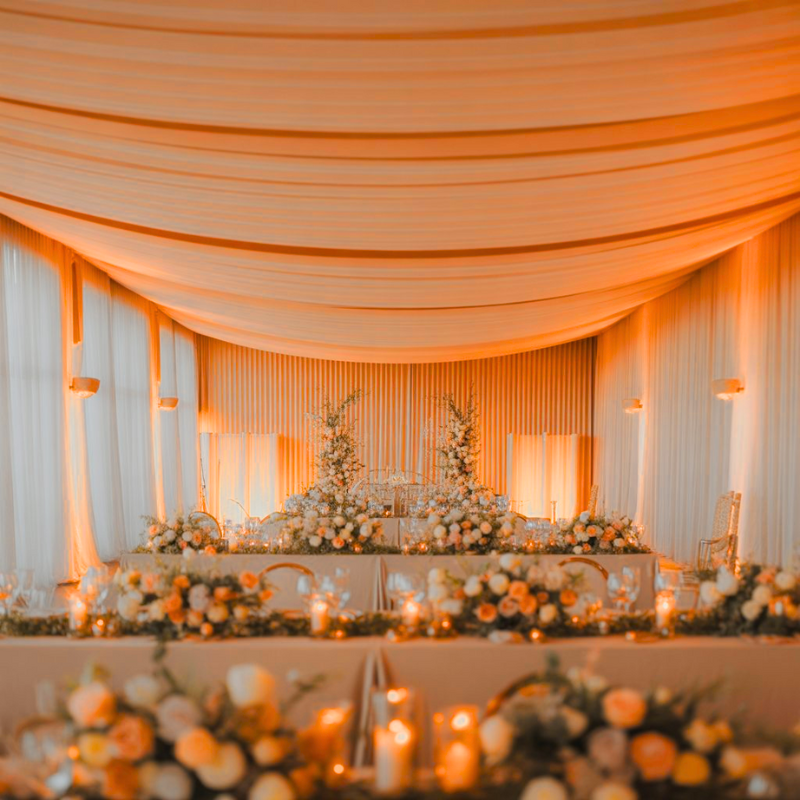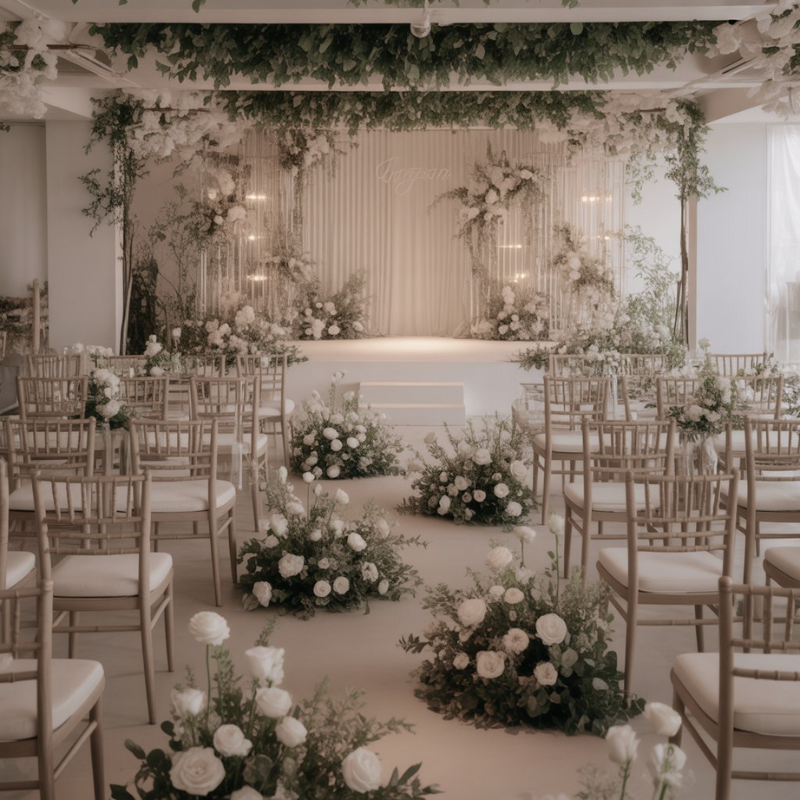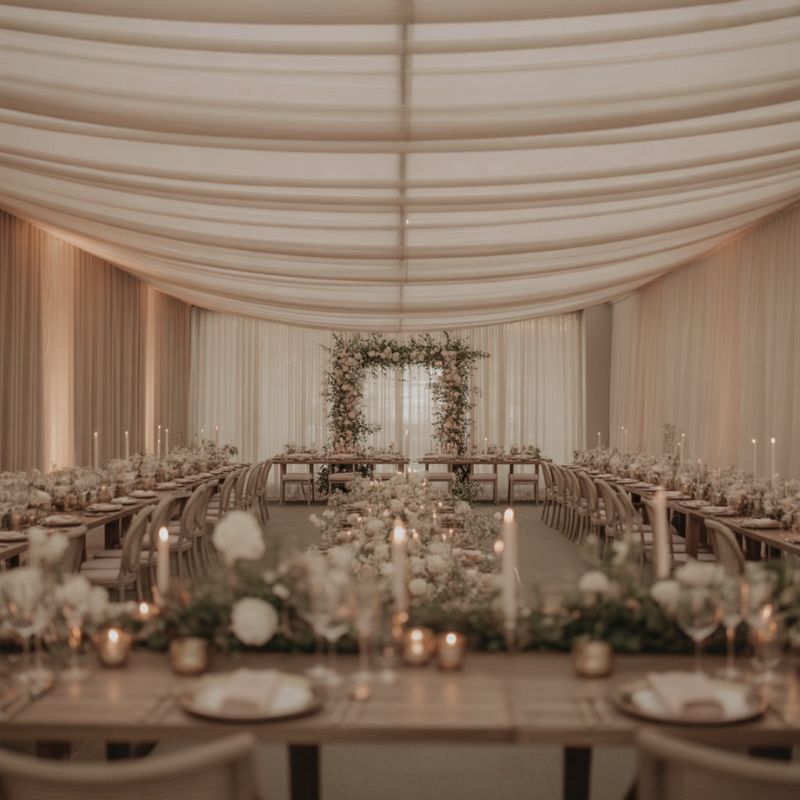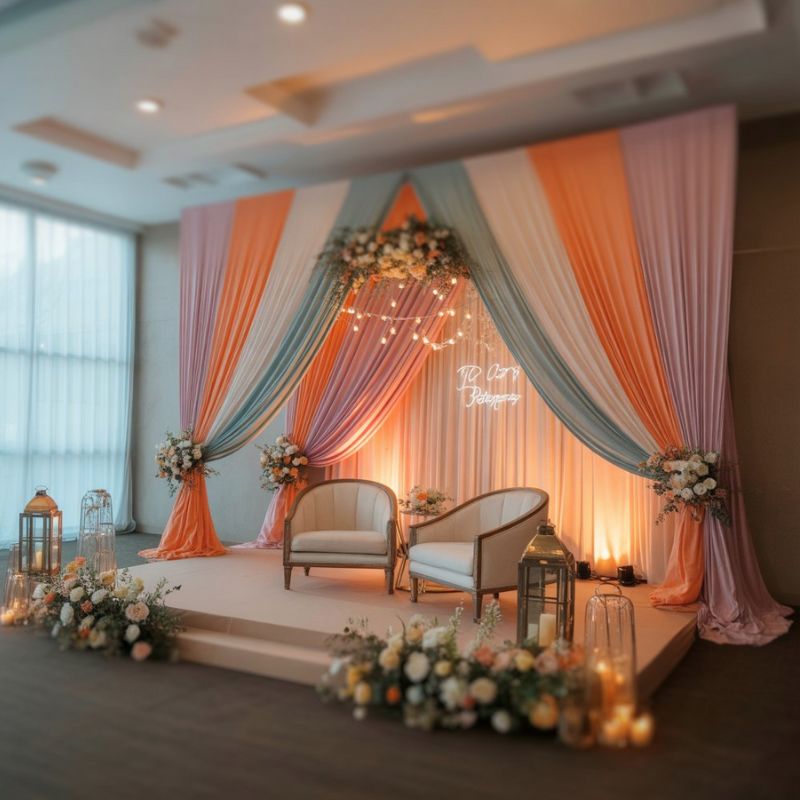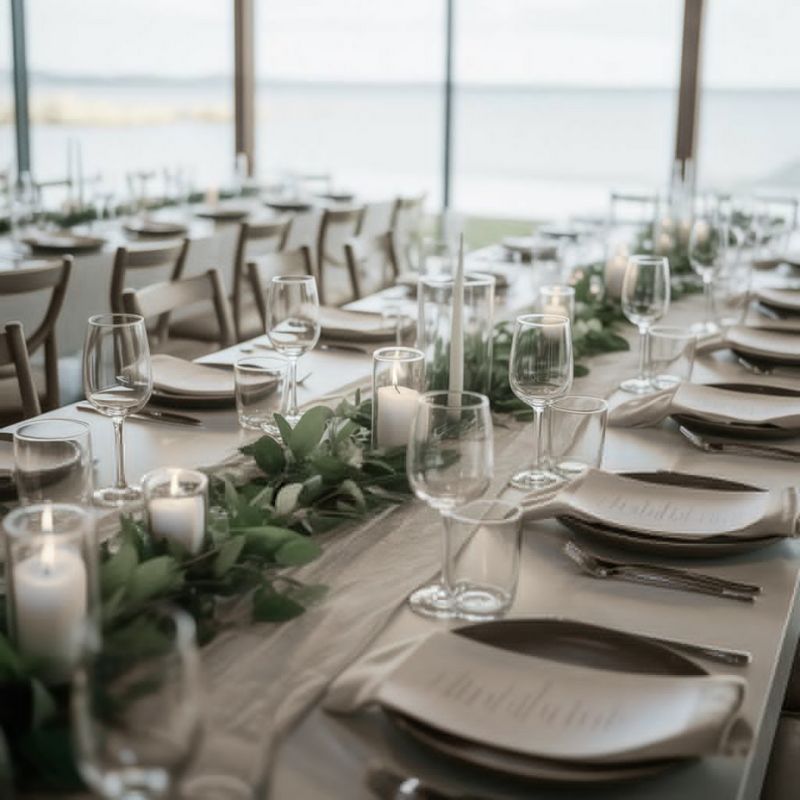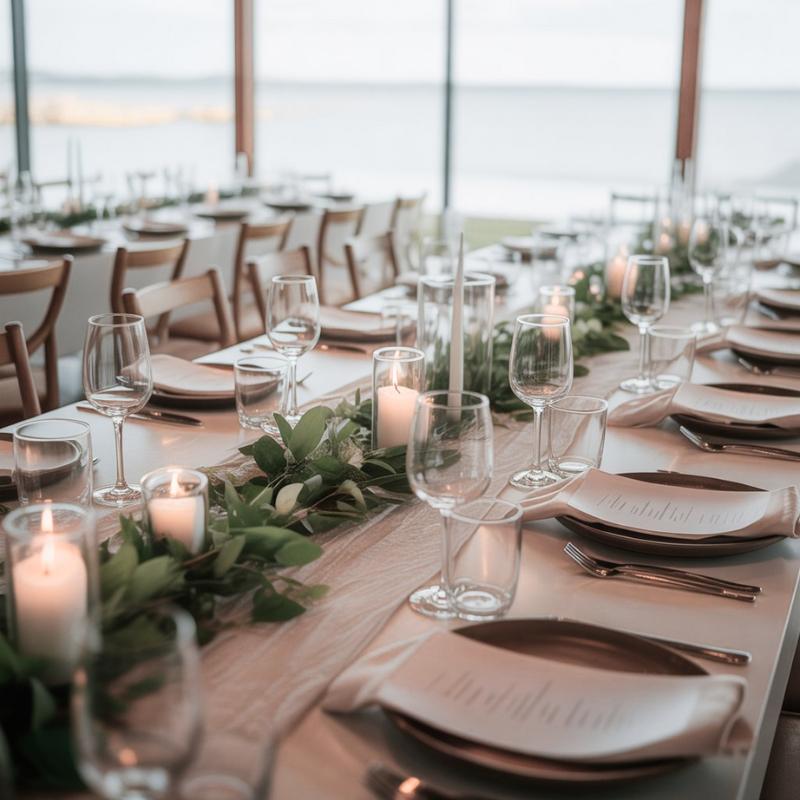
Over the years, I’ve worked with couples who felt pressured to include centerpieces simply because “that’s how wedding tables are done.” The truth is, centerpieces are optional—not essential. Some of the most visually striking receptions I’ve designed had no traditional centerpieces at all, yet guests couldn’t stop talking about how elegant and intentional everything felt.
Skipping centerpieces gives you more freedom to design tables that feel lighter, more modern, and more guest-friendly. Tall arrangements often block sightlines, while low florals can crowd limited table space. Removing them instantly creates a cleaner, more open look that encourages conversation and comfort.
From a practical standpoint, eliminating centerpieces also allows you to redirect your budget toward elements that guests actually interact with—linens, chairs, tableware, lighting, and personal details. When done correctly, these elements don’t feel like “replacements.” They become the design itself.
Most importantly, decorating wedding tables without centerpieces forces you to think holistically. Instead of one decorative item competing for attention, the entire table becomes a cohesive design moment.
What Guests Actually Notice on Wedding Tables (And What They Don’t)
One of the biggest misconceptions I hear from couples is that guests will notice the absence of centerpieces. In reality, guests rarely remember centerpieces unless they are unusually large, dramatic, or inconvenient. What they do notice is how the table makes them feel when they sit down.
Guests notice if the table feels cramped or cluttered. They notice whether they can comfortably place their drinks, phones, and handbags. They notice if the table feels thoughtfully styled or like an afterthought. These impressions come from the overall presentation—not a single decorative object in the middle.
From my experience, guests are far more influenced by:
-
The texture and color of the linens
-
The elegance of the place settings
-
The warmth of candlelight
-
The clarity and cleanliness of the table layout
When these elements are well executed, no one wonders where the centerpiece went. Instead, the table feels intentional, balanced, and welcoming.
Understanding this mindset shift is essential when learning how to decorate wedding tables without centerpieces. Once you stop designing for tradition and start designing for experience, everything changes.
Key Design Principles for Decorating Wedding Tables Without Centerpieces
When you remove centerpieces, design principles become more important than ever. Without a focal object in the middle of the table, balance and repetition take the lead. I always start by deciding what visual element will anchor the table instead.
One of the most effective principles is horizontal design. Instead of building height in the center, I spread visual interest across the table surface. This could be through runners, candles, layered textures, or repeated details at each place setting.
Another critical principle is cohesion. Every item on the table should feel like it belongs to the same story. When there’s no centerpiece to “explain” the theme, mismatched elements stand out quickly. Consistency in color palette, material, and style keeps the table polished rather than bare.
I also pay close attention to negative space. Empty space is not a flaw—it’s a design tool. Leaving breathing room on the table allows each element to shine without competition. This is especially important for modern, minimalist, or romantic weddings where elegance comes from restraint.
When these principles guide your choices, the table never feels unfinished. It feels curated.
Table Linens That Make a Statement on Their Own
If you want to know how to decorate wedding tables without centerpieces successfully, start with your linens. Linens are the foundation of the table, yet they’re often treated as a background detail. In centerpiece-free designs, they become a starring element.
High-quality linens instantly elevate the table. Textured fabrics like velvet, linen blends, or soft matte satins add depth without needing extra décor. Even a simple table becomes visually rich when the fabric itself has character.
Color choice matters just as much as texture. Neutral tones create a timeless look, while muted pastels or earthy hues can subtly reinforce your wedding palette. I often advise couples to choose linens that contrast slightly with the dinnerware so each element stands out clearly.
Another overlooked detail is how linens fit the table. Floor-length linens feel formal and romantic, while tailored or puddled styles can lean modern or organic. When linens are well chosen and properly fitted, they carry the table visually—no centerpiece required.
Using Table Runners to Replace Traditional Centerpieces
Table runners are one of my favorite tools when designing wedding tables without centerpieces. They naturally guide the eye across the table and create a sense of structure without overwhelming the space.
A runner works especially well on long banquet tables, where a single centerpiece would feel lost anyway. Instead of one focal point, the runner creates a continuous design that feels intentional from end to end.
Fabric runners add softness, while materials like gauze, chiffon, or raw linen introduce texture and movement. For a more modern look, structured runners in neutral tones keep the table clean and sophisticated.
Runners also pair beautifully with other elements. I often layer:
-
Low-profile candles spaced evenly
-
Small greenery accents tucked along the runner
-
Minimal table numbers or menus placed strategically
The result feels full without feeling crowded. The runner doesn’t replace the centerpiece—it redefines the table’s visual focus entirely.
Creative Place Settings That Become the Focal Point
When there’s no centerpiece on the table, place settings naturally draw the eye—and that’s a good thing. I’ve designed many receptions where the place setting itself became the star of the table. This approach feels intentional, elevated, and incredibly guest-focused.
Chargers are one of the easiest ways to add presence. A metallic, stone, or textured charger instantly frames each place setting and creates rhythm across the table. When every guest has the same beautifully styled setting, the repetition creates visual impact without clutter.
Napkins also play a powerful role. Instead of folding them flat, I often use soft knots, loose drapes, or vertical folds placed directly on the plate. Fabric napkins in neutral or tonal shades add dimension, while personalized napkin menus or name cards layered on top introduce a bespoke feel.
Small details matter here. Thoughtfully chosen flatware, handwritten place cards, or subtle embellishments at each setting collectively replace what a centerpiece would normally do—anchor the table visually.
How Candles Can Anchor a Table Without Feeling Like a Centerpiece
Candles are one of the most effective ways to decorate wedding tables without centerpieces, but the key is how they’re used. Instead of clustering candles in the center, I spread them evenly across the table to create balance and warmth.
Low-profile candles work best. Tapers in slim holders, small votives, or clear cylinders keep the table open while still adding glow. The goal is ambiance, not obstruction. When candles are spaced consistently, they guide the eye gently rather than pulling attention to one spot.
Mixing candle heights adds subtle interest without crossing into centerpiece territory. I often combine:
-
Short votives for soft light
-
Medium-height tapers for elegance
-
Occasional glass hurricanes for texture
The flicker of candlelight instantly elevates the atmosphere. Even the simplest table feels romantic and intentional once candles are introduced thoughtfully.
Minimal Greenery Ideas That Don’t Count as Centerpieces
Greenery doesn’t automatically mean centerpieces. When used sparingly and horizontally, it becomes a supporting design element rather than a focal point. I’ve found this approach especially effective for couples who love organic style but want to avoid traditional floral arrangements.
Loose eucalyptus, olive branches, or ruscus can be laid gently along runners or tucked between candles. The key is restraint. Instead of full garlands, I use small clusters or single stems repeated across the table.
This technique works beautifully for outdoor and garden weddings, where the surroundings already provide visual richness. Indoors, it adds softness without overwhelming the space.
Greenery used this way enhances the table’s texture and color without demanding attention. It feels effortless, natural, and completely intentional.
Using Tableware, Chargers, and Napkins as Décor
When couples ask me how to decorate wedding tables without centerpieces, I often remind them that tableware is décor. Plates, glassware, and cutlery are already on the table—choosing the right styles transforms them from functional items into design features.
Layered tableware adds depth. A charger beneath a dinner plate, paired with elegant flatware, creates a composed and polished look. Glassware matters too. Mixing water goblets with wine glasses or using colored or textured glass adds personality without extra décor.
Napkins deserve special attention here. Cloth napkins in complementary tones can soften the table and tie the palette together. Placement also matters—on the plate, tucked into a glass, or folded beside the setting all create different visual effects.
When these elements are chosen intentionally, the table feels styled rather than sparse. Nothing feels missing.
Personal Touches That Elevate Tables Without Adding Bulk
Personal details are often what guests remember most. Without centerpieces competing for attention, these touches shine even brighter. I always encourage couples to include elements that feel meaningful rather than decorative for decoration’s sake.
This could be a handwritten note at each place setting, a custom menu card, or a small favor that doubles as décor. When these items are thoughtfully designed, they contribute to the overall look while also creating an emotional connection.
I’ve seen simple details make a big impact:
-
Personalized place cards with meaningful quotes
-
Menus printed on textured or handmade paper
-
Small favors that reflect the couple’s story
These additions don’t clutter the table. Instead, they make it feel intentional, warm, and deeply personal.
Budget-Friendly Table Décor Ideas Without Centerpieces
One of the biggest advantages of skipping centerpieces is budget flexibility. Without floral arrangements to account for, you can invest in fewer, higher-quality elements that get reused across the entire reception.
Candles are one of the most cost-effective options. Buying in bulk and reusing them on cocktail tables, bars, or lounge areas stretches your investment further. Linens and runners can often be rented for a fraction of the cost of fresh florals.
Place settings also offer excellent value. Chargers, napkins, and paper goods elevate every single guest’s experience, which makes them feel worth the spend.
From a decorator’s perspective, this approach often results in a more refined look than trying to stretch a floral budget too thin.
Common Mistakes to Avoid When Skipping Centerpieces
The most common mistake I see is leaving the table too bare. Skipping centerpieces doesn’t mean skipping design. Every element still needs to be considered and placed intentionally.
Another issue is overcrowding the table with too many small items. Without a centerpiece, it’s tempting to add multiple accents to “fill the space,” but this can quickly feel cluttered. Balance is key.
Finally, inconsistency can break the look. Mixing too many colors, materials, or styles becomes obvious when there’s no central element to unify the table. Sticking to a cohesive palette and theme keeps everything polished.
Avoiding these pitfalls ensures the table feels designed, not unfinished.
Final Styling Tips From a Professional Wedding Decorator
After years of designing receptions, I can confidently say that learning how to decorate wedding tables without centerpieces is about intention, not absence. Every choice should serve a purpose—whether visual, functional, or emotional.
Start with a strong foundation, layer thoughtfully, and allow negative space to work in your favor. When tables are designed this way, they feel elevated, guest-friendly, and effortlessly beautiful.
Centerpieces may be traditional, but they are far from essential. With the right approach, your wedding tables can feel more refined—and more memorable—without them.