Over the years, I’ve worked with countless couples who believed matching bride and groom outfits meant looking identical or overly coordinated. In reality, the most elegant weddings I’ve styled are the ones where the couple looks naturally connected without appearing staged. Subtle outfit matching allows both the bride and groom to express their individual style while still presenting a unified visual story.
When outfits are matched subtly, the result feels effortless. Guests may not immediately notice why the couple looks so harmonious, but they feel it. That quiet cohesion shows confidence, maturity, and thoughtful planning. It also photographs beautifully, which is something many couples underestimate until they see their wedding album.
This article focuses on practical, tasteful ways to match bride and groom outfits subtly. These are methods I use consistently when styling weddings because they work across different themes, cultures, and personal styles. The goal is never to overpower the bride or force the groom into a look that doesn’t feel authentic. Instead, it’s about visual balance and intention.
If you want to look coordinated without looking like you tried too hard, subtlety is the secret—and I’ll walk you through exactly how to achieve it.
What “Subtle Matching” Really Means for Bride and Groom Outfits
Subtle matching does not mean wearing the same color head to toe or mirroring every design detail. In professional wedding styling, subtlety is about repetition and harmony rather than duplication. It’s the art of letting small elements quietly echo between both outfits.
When I style couples, I look at their outfits as part of a larger visual composition. The bride’s dress, the groom’s suit, accessories, and even textures all contribute to the final look. Subtle matching happens when one or two elements intentionally connect these pieces without shouting for attention.
This kind of coordination allows each outfit to shine independently. The bride still feels bridal. The groom still looks confident and masculine. Yet when they stand side by side, their outfits make sense together. That balance is what elevates a wedding look from ordinary to refined.
Subtle matching is also timeless. Trends come and go, but understated coordination always feels elegant. Years later, couples are far more likely to love their photos when their outfits feel classic rather than overly styled or trendy.
Common Outfit Matching Mistakes Couples Should Avoid
One of the most common mistakes I see is couples trying to match too many elements at once. When color, fabric, accessories, and patterns all match perfectly, the result can feel forced. Instead of looking connected, the outfits compete with each other.
Another frequent issue is ignoring proportions and formality. A heavily embellished gown paired with a very casual groom’s look creates imbalance. Even if the colors technically match, the overall visual weight feels off, especially in photos.
Couples also sometimes overlook how lighting and venue affect outfit coordination. A color that looks subtle indoors may appear much stronger outdoors. Without considering the setting, subtle matching can accidentally turn into obvious matching.
To avoid these mistakes, I always advise couples to focus on intention rather than imitation. Matching works best when it feels thoughtful, not mechanical. Less is almost always more.
6 Ways to Match Bride and Groom Outfits Subtly
1. Use a Shared Color Accent Without Being Obvious
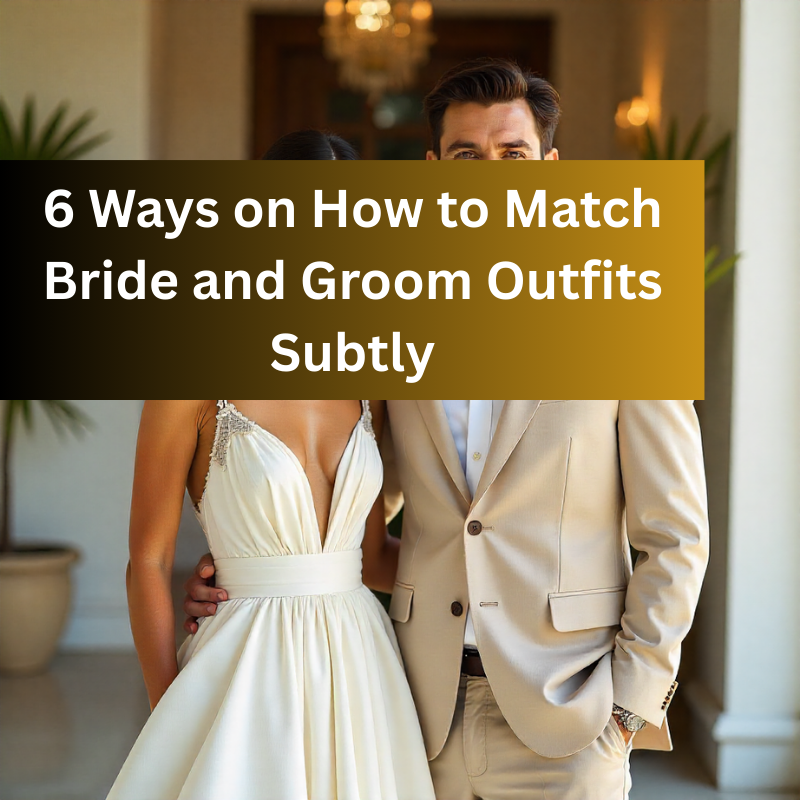
One of the easiest and most effective ways to match bride and groom outfits subtly is through shared color accents. This does not mean wearing the same shade in a bold way. Instead, I recommend choosing a soft or secondary color that appears naturally in both looks.
For example, if the bride’s gown has warm undertones—such as champagne, ivory, or blush—the groom can reflect that warmth through accessories. A tie, pocket square, boutonniere, or even subtle stitching can quietly mirror the bride’s palette.
What works particularly well is using muted or neutral variations of the same color. Soft gold, dusty blue, sage green, or warm taupe all photograph beautifully and blend effortlessly into most wedding themes.
When done correctly, shared color accents create a visual link that feels organic. Guests won’t necessarily point it out, but they’ll sense the cohesion immediately.
2. Coordinate Fabric Textures and Finishes
Texture is an often-overlooked element in outfit coordination, yet it plays a major role in how polished a couple looks together. As a decorator, I pay close attention to fabric finishes because they affect how light interacts with the outfits.
If a bride’s dress features matte lace, soft tulle, or crepe, pairing it with a groom’s suit that has a similar matte finish creates harmony. On the other hand, a high-shine satin gown paired with a very flat, casual fabric can feel disconnected.
This doesn’t mean both outfits need to use the same fabric. Instead, the goal is compatibility. Structured fabrics work well together. Soft, flowing materials complement each other naturally.
When textures align, the couple looks balanced from every angle, especially in close-up photos. It’s a subtle detail, but it makes a noticeable difference.
3. Match Outfit Details Through Accessories
Accessories are where subtle matching truly shines. They allow coordination without affecting the main silhouette of either outfit. This is why I often focus on accessories when styling couples who want a refined look.
Small details can do a lot of work:
-
A groom’s cufflinks that echo the bride’s jewelry tone
-
A boutonniere that reflects floral elements in the bridal bouquet
-
Metallic accents that match between shoes, belts, or hairpieces
Accessories are also easy to adjust. If something feels too obvious, it can be toned down quickly. This flexibility makes them ideal for couples who want control over how subtle the matching appears.
The key is restraint. One or two shared accessory details are usually enough to create connection without overdoing it.
4. Align the Level of Formality Between Both Outfits
One of the most important yet underestimated aspects of subtle outfit matching is ensuring both outfits speak the same formal language. I’ve seen beautifully designed gowns paired with groom outfits that felt too relaxed, and the disconnect shows immediately, especially in photographs.
Formality isn’t just about tuxedo versus suit. It includes tailoring, structure, and finishing details. A heavily structured bridal gown pairs best with a sharply tailored suit, while a soft, bohemian dress works more naturally alongside relaxed tailoring and lighter fabrics.
When both outfits align in formality, they visually support each other. Neither look feels underdressed or overdressed, and the couple appears intentionally styled rather than accidentally mismatched.
This alignment also affects how confident each partner feels. When both look equally polished, it creates balance, which translates into better posture, stronger presence, and more natural interactions.
5. Draw Inspiration From the Wedding Theme or Setting
As a wedding decorator, I always consider the environment first. The venue, season, and overall wedding style should guide outfit coordination. When the setting influences both looks, subtle matching happens naturally.
For example, a garden wedding encourages softer colors, breathable fabrics, and organic textures. A ballroom wedding calls for cleaner lines, richer tones, and structured silhouettes. When both outfits respond to the same environment, they automatically feel connected.
Cultural elements also play a powerful role. Even when the bride and groom are wearing different traditional or modern outfits, repeating motifs, color families, or fabric finishes creates visual unity without forcing sameness.
Using the wedding theme as a reference point keeps outfit decisions grounded. It prevents over-styling and ensures the couple fits beautifully into the space they’ve chosen.
6. Create Visual Balance Through Silhouette and Fit
Silhouette is another subtle but powerful tool in outfit coordination. While the bride and groom will naturally wear very different styles, the overall proportions should feel balanced when they stand together.
If a bridal gown has dramatic volume, sharp tailoring on the groom helps anchor the look. If the bride’s dress is minimal and fluid, a softer silhouette for the groom creates harmony rather than contrast.
Fit matters just as much as style. Poor tailoring can undo even the best coordination efforts. I always recommend professional fittings for both partners, as well-fitted outfits naturally look more intentional and cohesive.
When silhouettes complement each other, the couple looks visually aligned from head to toe, even without obvious matching elements.
How Subtle Outfit Matching Enhances Wedding Photos
Photography reveals details the eye often misses in real time. Subtle outfit matching becomes especially important when viewed through a camera lens. Coordinated tones, textures, and proportions create images that feel calm, elegant, and timeless.
When outfits clash or feel disconnected, photographers have a harder time creating balanced compositions. On the other hand, subtly matched outfits allow the couple to blend beautifully into both wide shots and close-ups.
This type of coordination also reduces the need for heavy photo editing. Natural harmony in outfits leads to truer colors, better lighting balance, and more flattering results overall.
Years later, couples often appreciate subtle matching more than bold coordination. It ages better and keeps the focus on emotion rather than fashion statements.
Styling Tips for Different Wedding Styles
Different wedding styles call for different approaches to subtle matching. Over the years, I’ve found that adapting coordination methods to the wedding style leads to the best results.
For modern or minimalist weddings, focus on clean lines, neutral tones, and refined accessories. Keep details intentional but restrained.
For traditional or cultural weddings, repetition of motifs, embroidery styles, or color families works better than identical designs.
For romantic or bohemian weddings, texture, softness, and organic materials create connection without rigidity.
Adapting subtle matching techniques to the overall style ensures the couple looks authentic and well-considered rather than overly styled.
How Early Outfit Planning Helps Achieve Natural Coordination
One mistake many couples make is planning outfits separately and trying to match them at the last minute. Subtle coordination works best when both outfits are considered together from the beginning.
Early planning allows room for thoughtful adjustments. Colors can be softened, fabrics can be swapped, and accessories can be chosen with intention rather than compromise.
I always encourage couples to share inspiration boards or fabric samples. This doesn’t limit creativity—it enhances it by ensuring both looks evolve together.
When coordination is part of the process, not an afterthought, the final result feels effortless.
Conclusion:
The most successful outfit coordination I’ve ever styled always starts with personal style. Trends, rules, and advice mean very little if the outfits don’t feel authentic to the couple wearing them.
Subtle matching is about connection, not perfection. It’s about allowing small details to speak quietly while the couple’s personality remains front and center.
When done right, matching bride and groom outfits subtly creates a sense of unity that feels natural, elegant, and deeply personal. That’s the kind of coordination that never goes out of style.